PT-141, what the evidence shows
By The PepVise Editorial Team · Reviewed June 28, 2026 · 14 min read
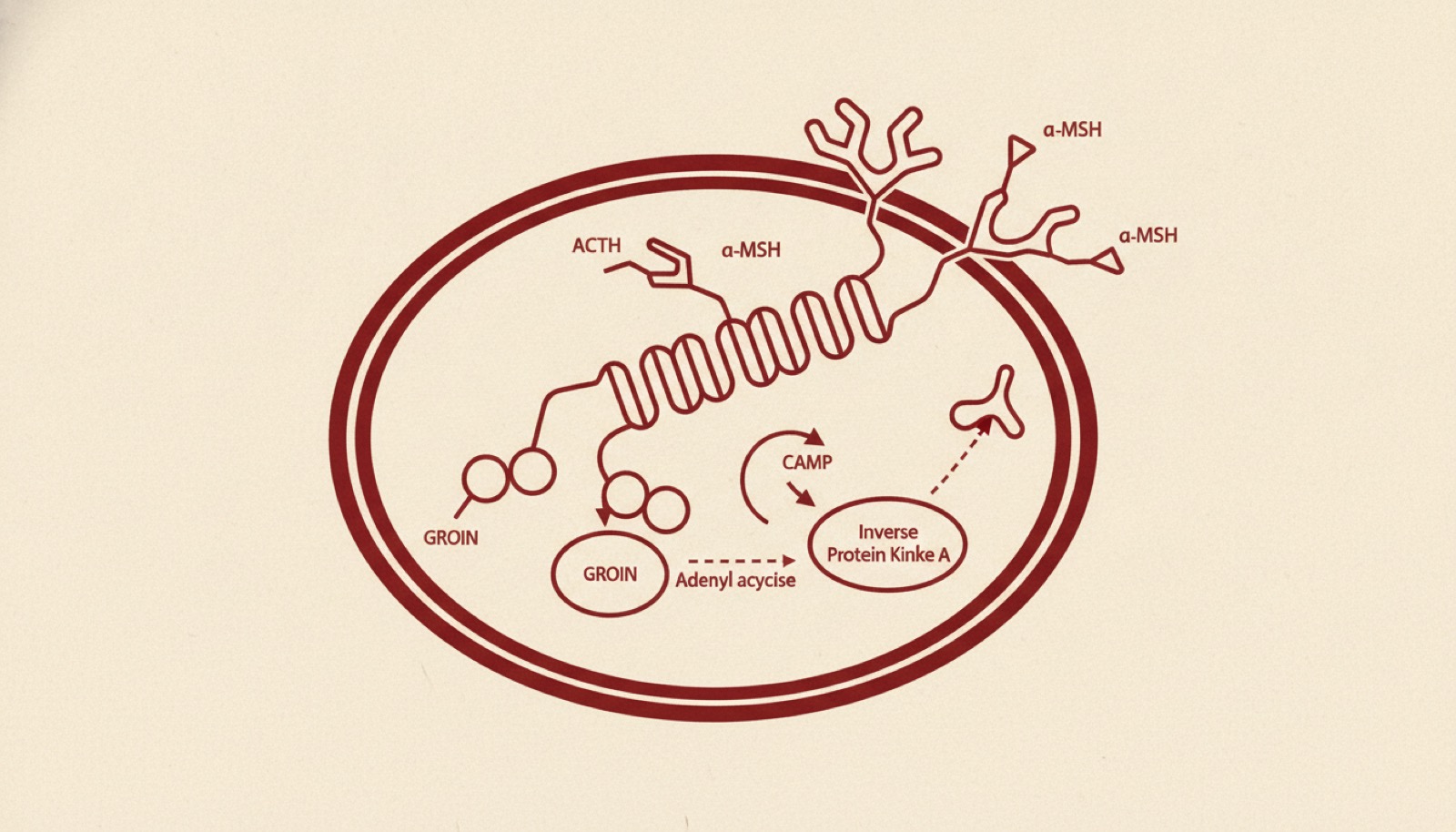
Evidence Ledger for PT-141 (bremelanotide): an FDA-approved melanocortin-receptor agonist (Vyleesi) for acquired, generalized hypoactive sexual desire disorder in premenopausal women, with Phase 3 data.
We describe what has been measured, by whom, at what scale, with what effect size, and with what caveats. Hedging, here, is honesty.
FDA prescribing information for Vyleesi (bremelanotide)
PT-141 is an approved drug, so the most honest single source is the label itself: it states the one approved indication, the trial-derived dosing, the safety profile including the blood-pressure caution, and the population studied. A regulatory document is a better source than any clinic page, including ours. We cite it the way we cite any primary source, to characterize what was actually authorized.
The texts we read alongside the papers.
- 01Primary regulatory document
FDA prescribing information for Vyleesi (bremelanotide)
The approved label is the primary source for what bremelanotide was studied for and authorized to treat: acquired, generalized HSDD in premenopausal women. It states the trial-derived dosing, the transient blood-pressure increase seen after dosing, and the populations excluded from the trials. A label is more reliable than any summary.
- 02Primary literature
PubMed saved search, 'bremelanotide'
Searching the generic name 'bremelanotide' rather than the research code 'PT-141' surfaces the rigorous record: the RECONNECT Phase 3 program in women with HSDD, earlier work on the abandoned erectile-dysfunction and intranasal-formulation programs, and the melanocortin pharmacology underneath. It shows why the approved use is narrow and the off-label uses are not trial-backed.
- 03Reference text
Williams Textbook of Endocrinology (14th ed.)
The melanocortin system PT-141 acts on (the MC4 receptor and central control of appetite, pigmentation, and sexual behavior) is standard endocrinology. Williams provides the receptor biology to read the mechanism critically, without the marketing layer vendor and clinic pages add.
How we read the literature
- Evidence tier
- We grade the literature on four tiers, High (replicated RCTs or meta-analyses), Moderate (multiple trials with mixed findings), Low (a single pilot or case series), and Anecdotal (preclinical only, no human data). The tier appears on every compound profile beside the claim it supports.
- Trial stage
- Where a compound sits in the human development pipeline is recorded as Preclinical, Phase 1, Phase 2, or Phase 3+. We pull the current stage from ClinicalTrials.gov and the EU Clinical Trials Register on access date and re-verify quarterly.
- Regulatory status
- We state the FDA posture plainly, approved for indication X, or labeled for research use only, or removed from the 503A list, or investigational under a specific IND. Regulatory status changes; every post carries a review date.
- Where we're uncertain
- Every compound profile closes with a named uncertainty section, the question we can't answer from the current literature, the trial we'd want to see, the effect size we'd treat as a real signal. Uncertainty is not a failure mode here; it's load-bearing.
The questions readers actually bring us.
- Is PT-141 FDA-approved?
- Yes, in a narrow indication. Bremelanotide (brand name Vyleesi) is FDA-approved to treat acquired, generalized hypoactive sexual desire disorder (HSDD) in premenopausal women. Other uses, such as in men or for erectile dysfunction, are not covered by that approval.
- How does PT-141 work?
- PT-141 (bremelanotide) is a melanocortin-receptor agonist acting mainly at the melanocortin-4 receptor in the central nervous system. Unlike PDE-5 inhibitors such as sildenafil, which act on blood flow, PT-141 acts on central desire pathways. It is a fundamentally different mechanism.
- What did the Phase 3 trials show?
- The RECONNECT program (Kingsberg et al. 2019) ran two randomized, placebo-controlled trials in premenopausal women with HSDD. Bremelanotide significantly improved sexual desire and reduced associated distress versus placebo, with modest effect sizes. Common adverse events were nausea, flushing, and headache, with a transient post-dose blood-pressure rise.
- Is PT-141 safe?
- It is an approved drug with a defined safety profile, not a clean enhancer. Nausea is common and a leading reason for discontinuation, and the label carries cardiovascular cautions because of a transient blood-pressure increase after dosing. An earlier intranasal formulation was abandoned in development over blood-pressure effects.
- Why does PepVise not give a PT-141 dose?
- Because it is a prescription drug whose label states the trial-derived dosing, and a dose from a website is not a substitute for a prescription. We describe the literature and do not instruct readers on administration.
A Phase 2 randomized trial with blinded outcome assessment would change the reading. A new independent replication outside the currently dominant research group would change the reading. A regulatory action, approval, restriction, or a class warning, would change the reading. When any of those lands, we update this profile within a week and mark what changed.
References cited on this page.
PubMed, ClinicalTrials.gov, and FDA documents only. Secondary sources appear when needed to characterize public discourse, never as a source for a clinical claim.
- [01]Kingsberg SA et al. Bremelanotide for the treatment of hypoactive sexual desire disorder: two randomized phase 3 trials (RECONNECT). Obstet Gynecol 2019;134:899-908
- [02]Clayton AH et al. Bremelanotide for female sexual dysfunctions in premenopausal women: a randomized, placebo-controlled dose-finding trial. Womens Health (Lond) 2016
- [03]Molinoff PB et al. PT-141: a melanocortin agonist for the treatment of sexual dysfunction. Ann N Y Acad Sci 2003
- [04]FDA prescribing information, Vyleesi (bremelanotide)
About The Pepvise Editorial Team
The Pepvise Editorial Team is a small group of researchers and science writers reading the peer-reviewed peptide literature and translating it into calm, cited analysis. We do not sell peptides, recommend peptides, or tell readers what to administer. We describe what has been measured, by whom, at what scale, with what effect size.
Compound reviews are signed off by Dr. Priya Narang, MD, MPH (endocrinologist) and Dr. Marcus Haley, PharmD, BCPS (board-certified clinical pharmacist). Both hold verifiable state-board licenses and have signed editorial-independence letters with us. See the full editorial board →
Adjacent in the literature.
BPC-157, What the Evidence Shows
Evidence Ledger for BPC-157: 50+ preclinical studies, 1 human pilot (Chang 2014, n=12), 1 active Phase trial, FDA removed from 503A list in 2023.
16 min readCompounds · Compound profileTB-500, The Field Guide
TB-500 vs Thymosin Beta-4 (same compound), mechanism, the preclinical tendon and recovery literature, and where the human data is thin.
14 min readCompounds · Compound profileGHK-Cu, Evidence and Hype
Copper peptide signaling, the topical RCT evidence for hair and skin, and the gap between topical and injectable claims.
13 min readGet the 2026 Peptide Evidence Ledger.
A 12-page PDF summary of where 10 major compounds sit, Preclinical / Human pilot / Phase trial / FDA status. Updated quarterly. Free.
By subscribing, you agree to our Privacy Policy. One calm, cited email a week. Unsubscribe anytime.