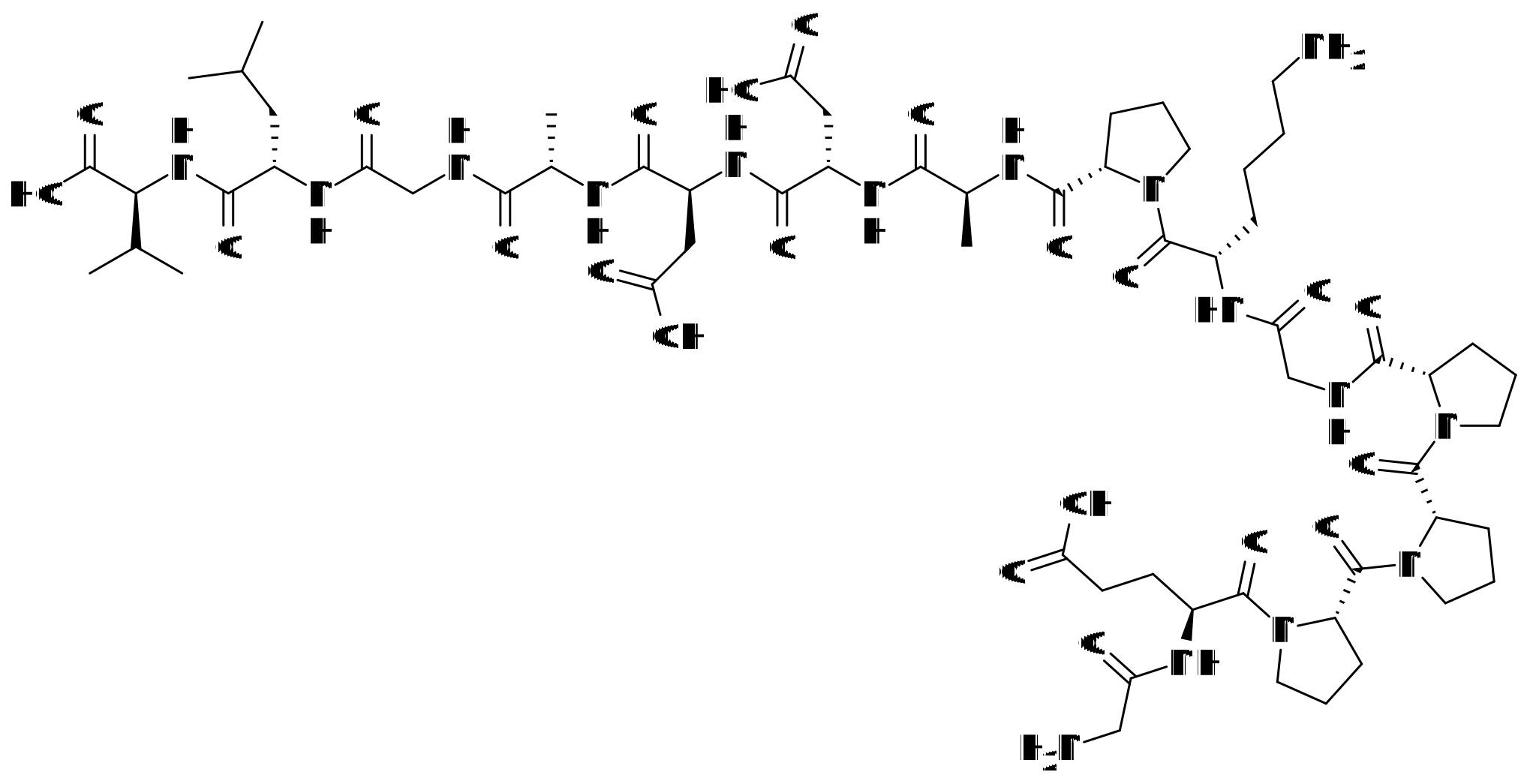
Analysis
Fifty-plus rodent papers, one published human pilot (Chang 2014, n=12), one active US Phase 1 listing. The mechanism story is coherent. The human story is not yet there.
The BPC-157 file is, on paper, the strongest in the research-peptide category. More than fifty preclinical papers cover tendon-to-bone healing, gut ulceration, and crush-injury models, and the published mechanism (angiogenesis with growth-factor modulation, plus nitric-oxide system interaction) is consistent with what cell biology would predict. The catch is that the published human file is one open-label oral pilot of twelve patients in ulcerative colitis, Chang et al. 2014, and a single registered Phase 1 in the US. That gap between rodent volume and human evidence is the entire reason BPC-157 sits at #1 with a 6.8, not a 9. The methodology v1.2 weights human data at 25% precisely because we do not want a peptide with one paper in humans to outrank a compound with three Phase 2s. The 2023 FDA decision removing BPC-157 from the 503A bulk-substances list is also load-bearing here: it does not change the science but it does change the legal pathway in the US, which v1.2 captures under regulatory posture. We rate BPC-157 #1 because it is the best-documented option in a category where the bar is low, not because it is proven.
Top four on every dimension.
Higher is better. Numbers are tabular, the methodology is on the methodology page, and yes, vendor trust counts because counterfeit risk is real.
Pros and cons
| WHAT WORKS | WHAT DOES NOT |
|---|---|
| Largest preclinical literature of any research peptide we cover. | Single published human pilot was n=12, open-label, oral route. |
| Mechanism (angiogenesis, growth-factor modulation) is consistent with established cell biology, not back-fitted. | Most preclinical work originates from one Zagreb research program, replication from independent labs is the missing piece. |
| Two registered Phase 1 trials lifted the human-data score from a flat zero in v1.1. | FDA's 2023 503A category change closes the cleanest US compounding pathway. |
| , | Counterfeit and underdose incidents in research-channel supply. |
Alternatives we tested
Three compounds that came up in the same comparison set.
- #2 · MOST REQUESTED5.9TB-500Thymosin Beta-4 fragment
The actin-binding biology is real; what most online sources sell as TB-500 is a fragment, not the full thymosin beta-4 protein.
- #3 · HIGHEST SCORE8.1GHK-CuCopper tripeptide
The cleanest evidence file in the database, peer-reviewed cosmetic and wound work, plus topical formulations available outside the research channel.
References
3 cited- Staresinic et al. 2003, J Orthop Res
- Chang et al. 2014, Vojnosanitski Pregled
- ClinicalTrials.gov, BPC-157 listings